
Artistic Itinerary
In recent years, the Municipality of Lerici has been committed to the valorisation of its artistic and landscape heritage, with this spirit, has requalified some of the territory’s focal points, including the roundabouts leading to Lerici and San Terenzo, choosing works of contemporary art that, having become part of the municipal heritage and used as street furniture, enhance the territory, acting as a spokesperson for both artistic and social values.
La Danza della Rivelazione – by Vivianne Duchini (Lerici)
Mental landscape – by Yoshin Ogata
(Lerici – Primacina tunnel entrance roundabout)

The power of life, by Mario Tamberi
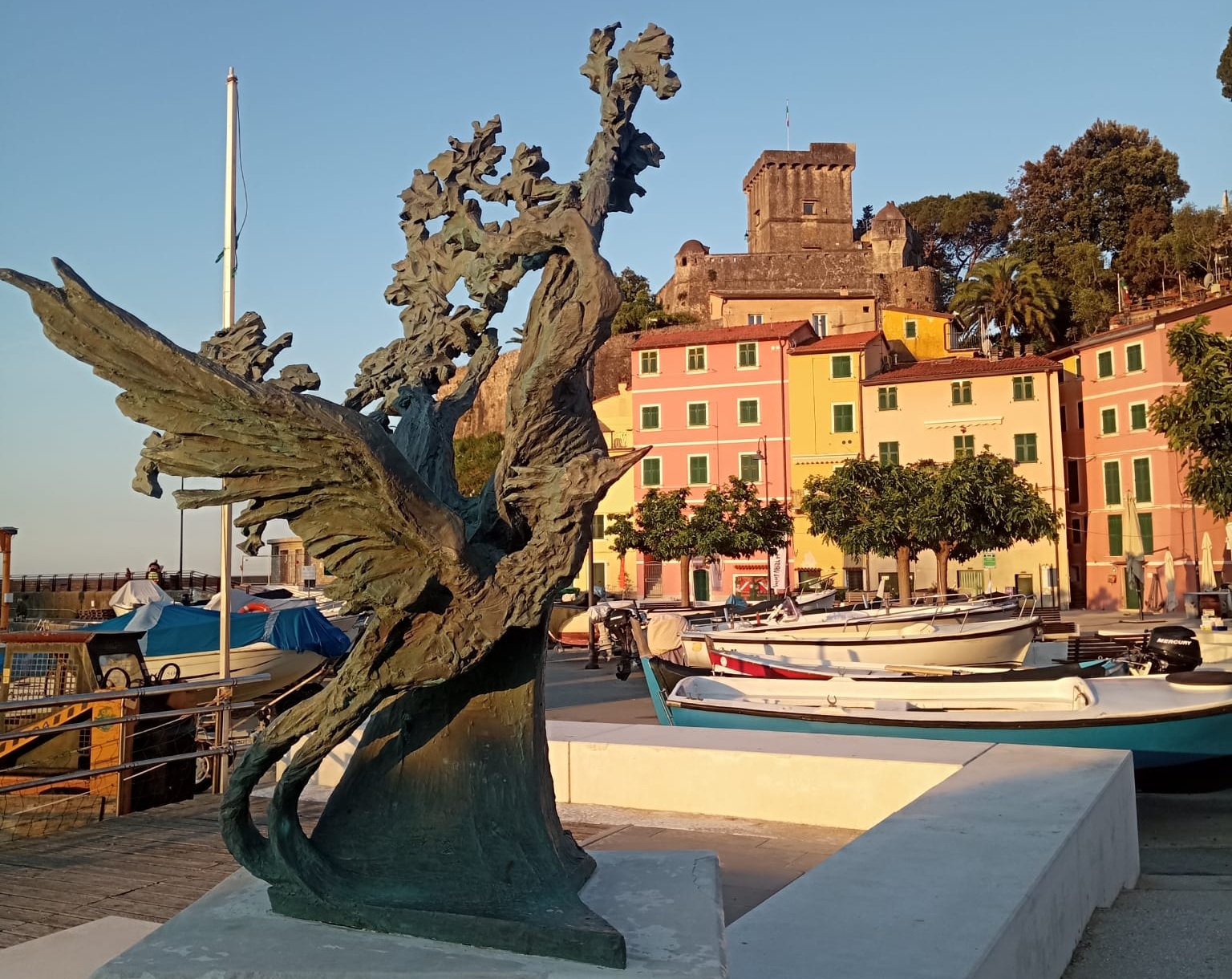
The Metamorphosis of the Phoenix, by Antonio De Paoli (San Terenzo – promenade)
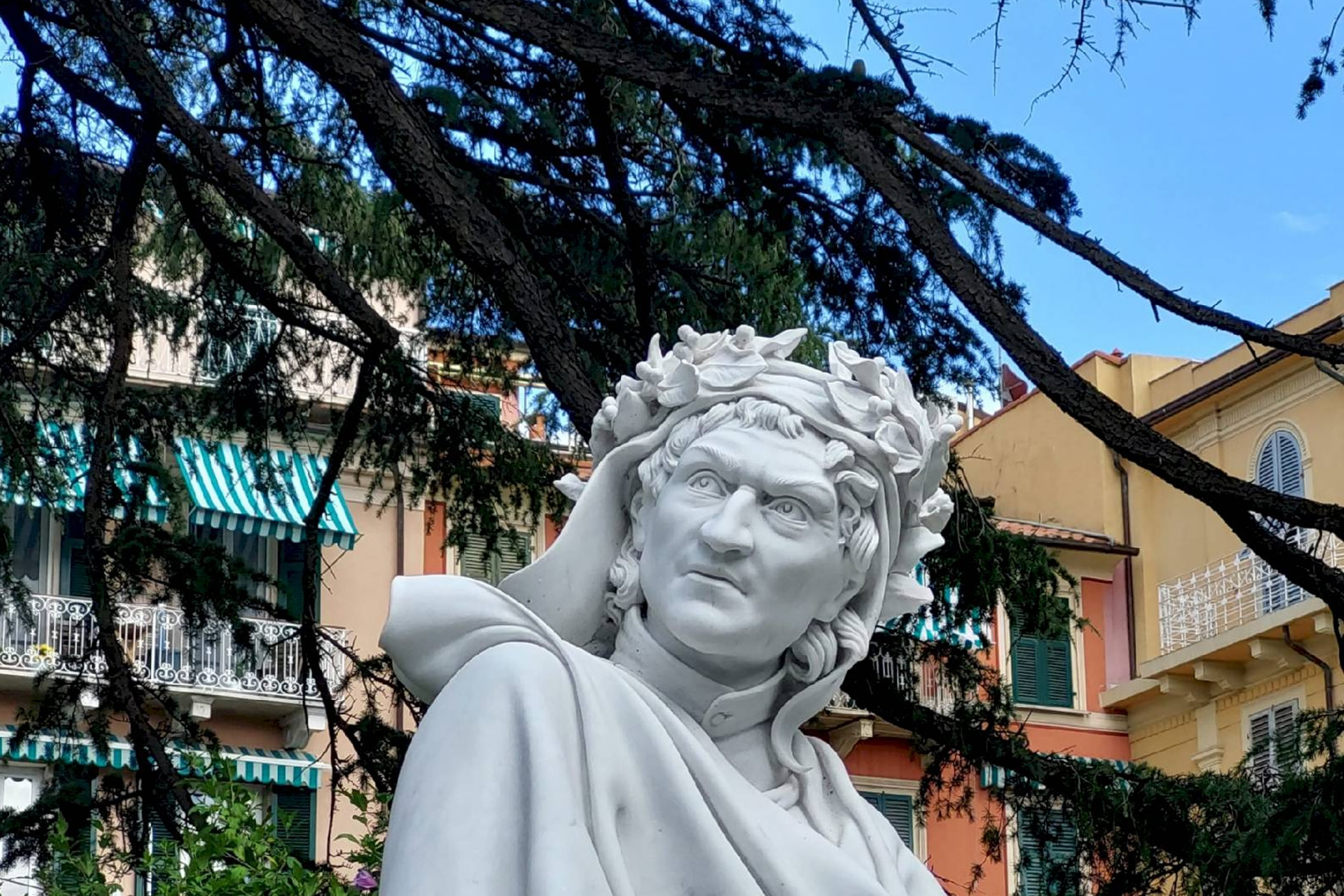
Dante Alighieri by Giuseppe Silvestri (Lerici – public gardens)
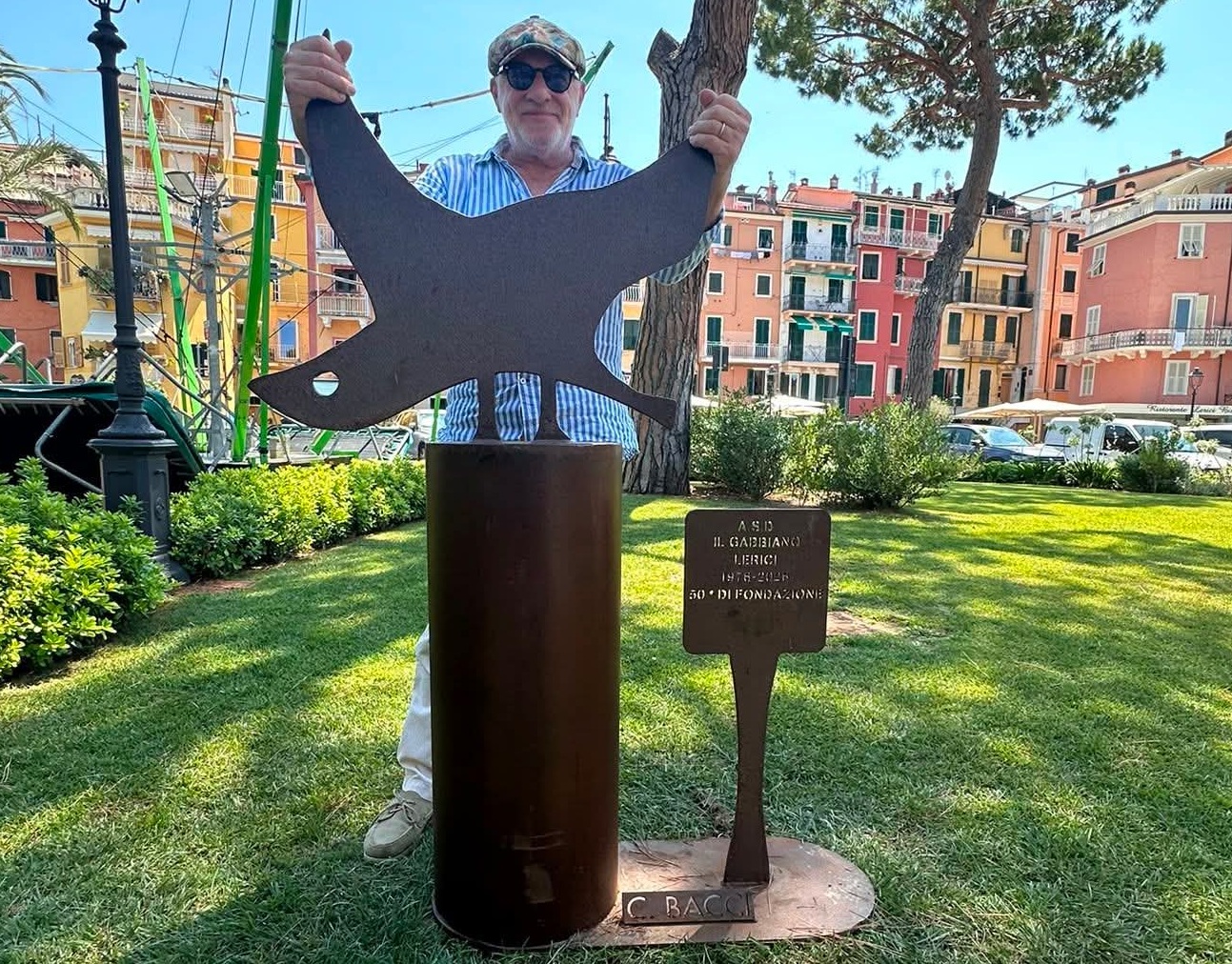
Seagull by Carlo Bacci (Lerici – public gardens)
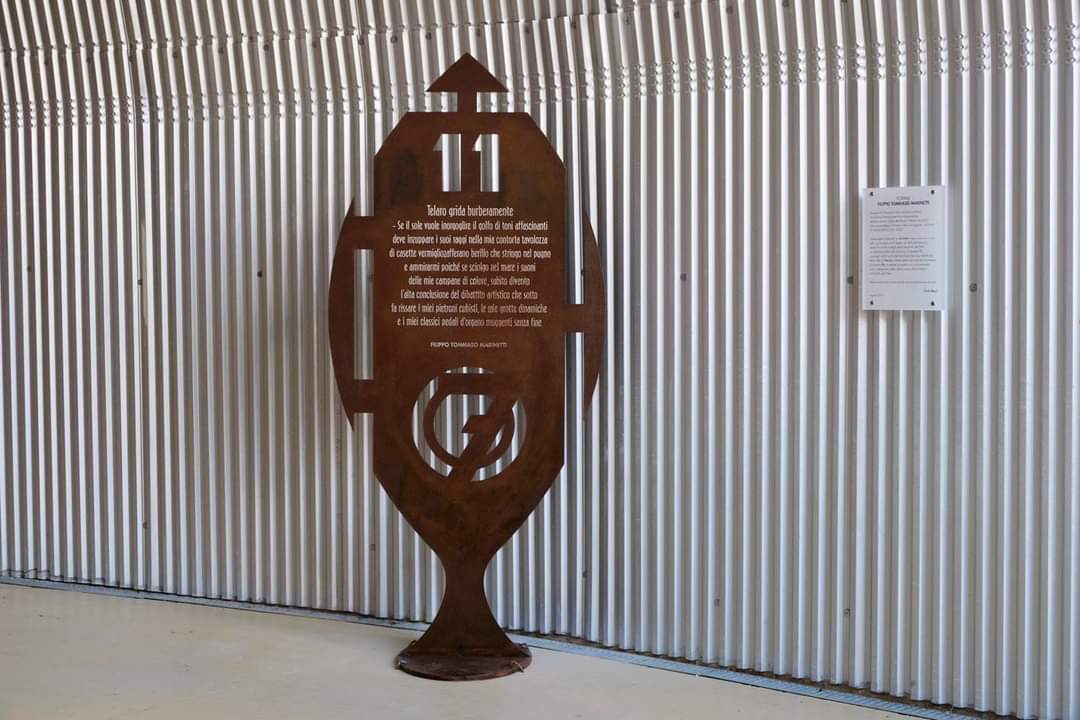
Forma Filippo Tommaso Marinetti, by Carlo Bacci (Lerici – La Padula Tunnel)
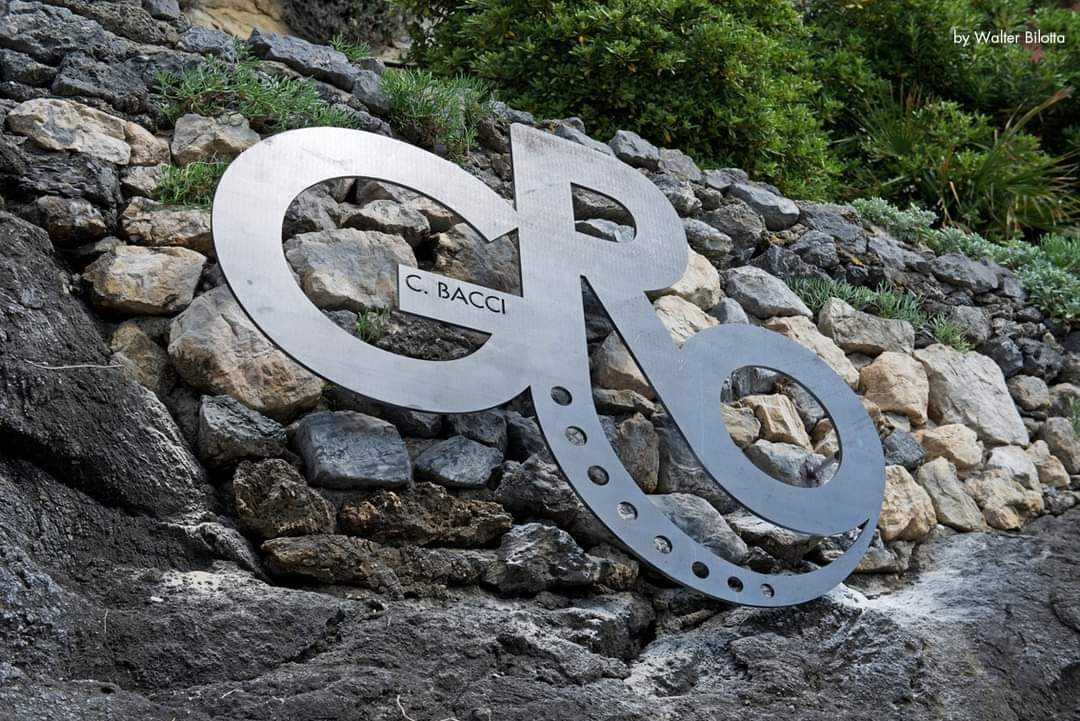
Gro, by Carlo Bacci (Tellaro – cliffs)
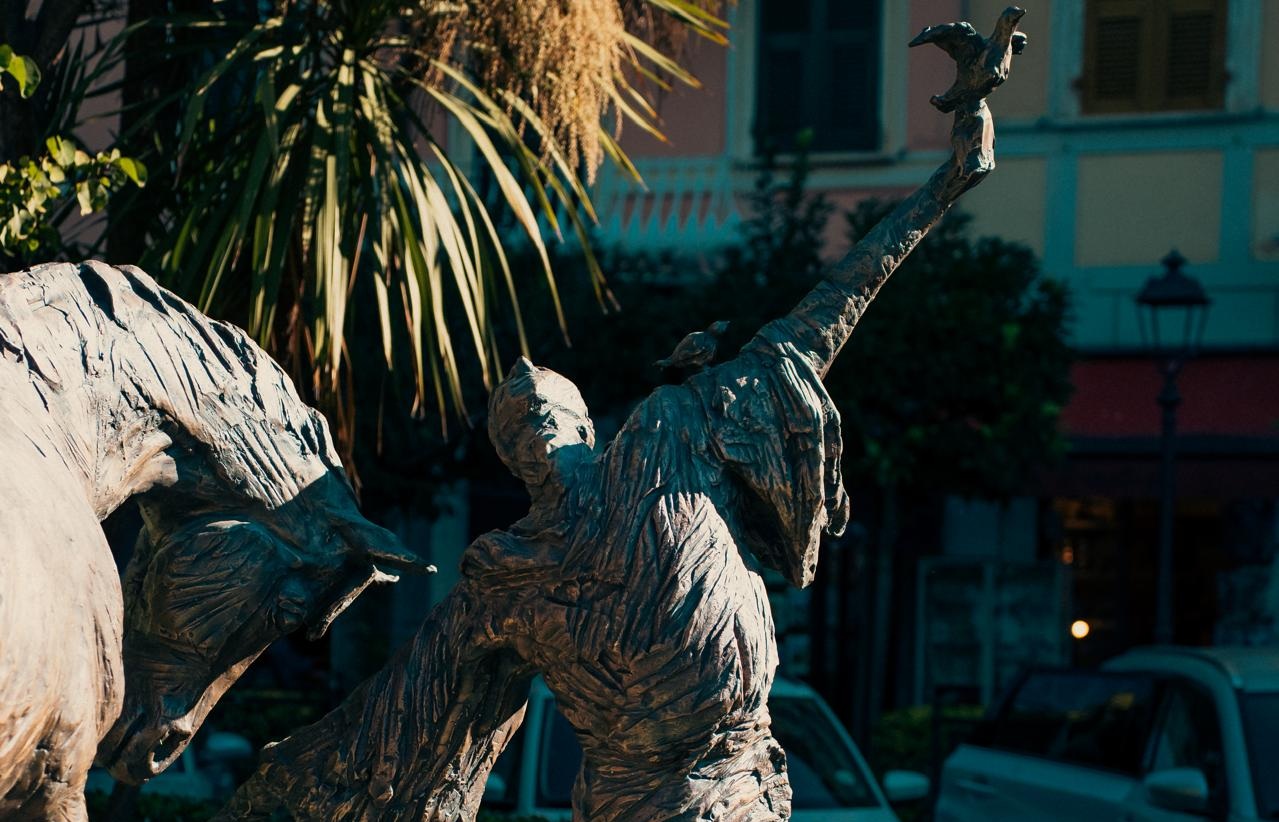
La danza della rivelazione, by Vivianne Duchini (Lerici – Public gardens)
The bronze work, created by Vivianne Duchini, was placed inside the historic gardens of Lerici on the occasion of the celebrations of the eighth centenary of the death of Saint Francis of Assisi (1226/2026). Lerici was chosen among 10 Italian municipalities designated to host artworks, as part of the national project “Sculptures – New Signs,” curated by Francesca Sacchi Tommasi of Etra Studio Tommasi, with the aim of keeping the Saint’s spiritual and cultural legacy alive through contemporary art.
Discover more
Vivianne Duchini, an internationally renowned Argentine sculptor, has created works exhibited around the world: in her extensive production, she has investigated and explored the relationship between man and horse. For Lerici, the artist has chosen to represent one of the fundamental moments in Francesco’s life: his return from the war and the beginning of his conversion. Inspired by the Giotto-esque iconography of the fresco cycle in the Upper Basilica of Assisi and, in particular, by the scene of the “Gift of the Cloak”, it depicts a young Francis stripping himself of his clothes and dismounting from his horse, while the animal seems to bow reverently, a sort of dance, from which the work’s title derives. “… there is no longer domination or war, but a profound harmony in which the warrior past of the Saint reconciles with the divine present and earthly strength gives way to the grace of universal fraternity”, underlines Francesca Sacchi Tommasi, curator of the project.
‘Paesaggio Mentale’ (Mental Landscape), by Yoshin Ogata
In 2016, following the success of the exhibition “Il Ciclo della Vita” (The Cycle of Life) at Castello San Giorgio, held under the patronage of the Presidency of the Council of Ministers and of the Ministry for Cultural Heritage and Activities, the Japanese artist Yoshin Ogata has donated one of his most iconic works to the Municipality of Lerici. “Paesaggio Mentale” (Mental Landscape), a sculpture in white Carrara marble, located on a roundabout at the entrance to the town, near the Primacina tunnel.
Discover more
Ogata’s “drop” of various shapes and sizes, masterfully sculpted in the finest marbles, represents the true artistic matrix of the Japanese artist. Water, which incapsulates the beginning and end of life, expands drop by drop, creating forms, concentric circles around a central void. The form integrates into the landscape and interacts with it: Ogata’s poetics, in order to find its maximum expression, requires the surrounding void and a direct relationship with the environment. This is why his works enhance spaces, landscapes, and panoramas in cities all over the world, from Brazil to Saudi Arabia, from Türkiye to Spain.
Born in Japan, he graduated in sculpture from the Brera Academy of Fine Arts in Milan. Ogata has travelled and lived in various parts of the world, from London to the United States, from Mexico to Rome, finally choosing the intimate hilly landscape of Zanego as his home.
‘Forma Golfo dei Poeti’ (The shape of the Gulf of Poets), by Carlo Bacci
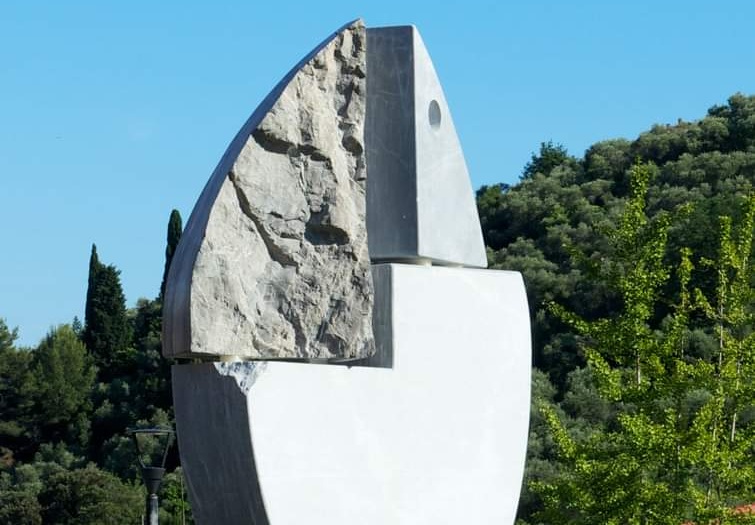
The western entrance to Lerici has changed its face in the name of art: in the centre of the roundabout in Via Gozzano (for those arriving from La Spezia, just after the Scoglietti tunnel) stands a work by the Tellaro artist Carlo Bacci, made of local grey stone, partly left unpolished, to remind us of the roughness of our territory.
Discover more
As the artist himself explains: “The sculpture consists of three blocks: two sails on the top and a block representing a castle. The one of Lerici for those coming from La Specia, the one of San Terenzo for those coming from the opposite direction”. The sculpture, which takes the form of a fish – one of the recurring figures in Bacci’s art – is part of the Forma series, a synthesis between Bacci and his native land.
The execution of ‘Forma Golfo dei Poeti’ was made possible thanks to the support of Demetra (Massa), a company owned by the Bencaster family. The work in Via Gozzano is a further step in the relationship between the artist and the Municipality of Lerici following the installation of welcome posters in the municipal area, featuring by the popular and very playful “Sovi”. (Editor’s note: the world of Sovi was born by chance from the artist’s pen in 2010. “Sovi” is an anagram of the word “viso” (face), so Sovi is a simple face with legs, arms and little fists instead of hands).
‘La Forza della Vita’ (The Power of Life), by Mario Tamberi
The Power of Life is the work of the artist Mario Tamberi, located in the centre of the Carbognano roundabout. Consisting of three fish superimposed in a vertical perspective scale, it is about two and a half metres high (69 cm wide and 30 cm thick), and rests on an iron base, fastened to a reinforced concrete plinth about approximately 80 cm in diameter. Two light points are positioned at the base which, in the darkness, enhance the surfaces. The artist explains that “The work was conceived as a dynamic thrust towards the sky in a sinuous vertical movement, symbolising the ancestral struggle for the survival of the marine world and the seafarers of our wonderful country. The choice of bronze and the emerald, green colour of the patina, with golden and copper reflections harmoniously echo the colour of the olive trees, the agaves and our seas”.
Discover more
The work was donated by the artist from Lerici as a complement to the exhibition that took place in 2022 in the rooms of the San Giorgio Castle: titled “Pensare un tempo migliore” (Thinking of a Better Time), the solo exhibition was created to celebrate the fifty-year career of Mario Tamberi, a multifaceted artist, painter and sculptor, teacher and cultural promoter, who has always developed new expressive languages, experimenting with all kinds of materials and subjects, including recycled ones. The sea is, undoubtedly, the driving force of his artistic poetics, and fish, a vital symbol of par excellence, are often the protagonists, as in the work of Carbognano.
‘La lumaca’ (The Snail), by Yoshin Ogata
Located in La Serra, Ogata’s “Lumaca” (Snail) stands out from the artist’s classical poetics, although it echoes his style in the skilful workmanship of white Carrara marble, masterfully polished to give form to a work that symbolically recalls the local tradition.
Discover more
The village of Serra is historically linked to the “Iumaga”, to which both the patronal feast and the historic festival refer, which for decades have enlivened the village in August. The municipality of Lerici has promoted this work with the intention of preserving and promoting this culinary peculiarity and recognising the value of the tradition rooted in the territory with attention to the specificities that distinguish the various districts.
‘La metamorfosi della fenice’ (The Metamorphosis of the Phoenix), by Antonio De Paoli
The Phoenix, a mythological bird symbol of par excellence of “death and rebirth”, is the mythological figure evoked in the work created by De Paoli for the centenary of the tragic “Falconara explosion”, celebrated in 2022.
The artist explains: “The myth in question, which represents the concept of resilience, is more relevant than ever. The redemption and rebirth of the Falconara tragedy can be taken as an example.
Discover more
This area was ‘reborn from its ashes’ like the Phoenix, stronger and more beautiful”. And again, “Its shape is ‘frozen’ in the moment when it transforms into an olive tree, a tree symbol of peace and rebirth. Its metamorphosis is not yet complete, only its left wing has taken on the shape of the tree. It is the metaphor for the possibilities of growth that this ‘reborn’ area offers”.
Antonio de Paoli, an artist, sculptor and scenographer, has created celebratory and commemorative works of art placed in public places throughout Italy. In 2022, he won the competition of ideas organised by the Municipality of Lerici for a work that would commemorate the tragic event of 1922, when the gunpowder magazine located inside the Falconara battery – the hill above San Terenzo – exploded leaving hundreds dead and displaced. It was one of the most serious tragedies of post-unification Italy and, as it involved both the Regia Marina and the volunteers from various institutions (e.g. Public Assistance), it is considered as the ideal beginning of the Italian Civil Protection.
‘Dante Alighieri’, by Giuseppe Silvestri
In 2021, on the occasion of the 700th anniversary of the poet’s death, a sculpture of Dante Alighieri, in white Carrara marble, was placed in the gardens of the Lerici seafront.
The work was created by Giuseppe Silvestri, an artist and professor at the Arts High School in Carrara, and it was forged from material supplied by Attilio Bencaster, who had already donated the marble for the statue by Carlo Bracci, located on the Bagnara roundabout.
Discover more
The Supreme Poet holds in his hand a book on which are engraved the famous verses of Canto III of Purgatory, in which Lerici appears. Upon his arrival before the steep slopes of Purgatory, in fact, Dante realises how harsh the ascent of that mountain is, comparing it to the coast of Liguria, equally steep, landslide-prone and dangerous. To identify the Ligurian territory, he mentions its two extremes: Lerici, a port he probably frequented in his travels to and from Lunigiana, and Turbia, a hill village behind Montecarlo.
“We came meanwhile unto the mountain’s foot;
There so precipitate we found the rock,
That nimble legs would there have been in vain. ‘
Twixt Lerici and Turbia, the most desert,
The most secluded pathway is a stair Easy and open,
if compared with that”.
Purgatory, Canto III, verses 46-51
‘The seagull’, by Carlo Bacci
On the occasion of the 50th° anniversary of its foundation (1976-2026) the association “Il Gabbiano asd” has chosen a work by Carlo Bacci to be placed in the redeveloped gardens of Largo Tarabotto. The title of the work, precisely, the Seagull.
Forma Filippo Tommaso Marinetti, by Carlo Bacci (Lerici – La Padula Tunnel), by Carlo Bacci
This sculpture by Carlo Bacci, donated by Banca Intesa to the municipality of Lerici in 2003, is dedicated to the founder of the Futurist movement and it is inspired by the airplanes of the early 1900s, as well as containing the symbols of Futurism: the number 11-like the 11 dots in the Futurist manifesto drafted by Marinetti-and the arrow, a symbol of the movement’s speed.
Discover more
The sculpture also contains the number 70, because the exhibition had taken place to coincide with the 70th anniversary of Marinetti’s challenge in the Gulf of Poets. Let us remember that the Futurists – and Marinetti himself – used to frequent Lerici and San Terenzo: many Futurist parties were held in the dance hall of today’s resort “Colombo” – Hotel San Terenzo.
Gro, by Carlo Bacci (Tellaro - cliffs)
“The GRO” is the name of the large rock located right in front of Tellaro, a very evocative descent to the sea. The redevelopment of this place included a new sculpture by artist Carlo Bacci, which was inaugurated in 2021. The work celebrates his name and takes up the spiral of the octopus tentacle, Tellaro’s graphic symbol. A very significant and visually striking sculpture like all of Bacci’s works.
Discover more
The artist’s words: happy and honored to have been called upon for “our” GRO. I had no doubts about how to carry out this intervention, only the name and surname of this place, so important for us that we were born and raised in Tellaro: GRO a sound that encapsulates its compact image. Its rust color, which I’ve always carried inside me. The sculpture is a Barogno family donation.